
Skid trails revisited
Logging roads and skid trails can take up a considerable part of a forest stand. Meanwhile, comprehensive research addresses reducing the impact of heavy forest machinery on forest soils.

Logging roads and skid trails can take up a considerable part of a forest stand. Meanwhile, comprehensive research addresses reducing the impact of heavy forest machinery on forest soils.

Over the past ten years, three research projects („Forschungs- und Entwicklungs-Projekt“) have aimed to record the implementation status of the MAB zoning concept in German biosphere reserves and to develop recommendations for designation, management and further development.

Landespflege Freiburg (Landscape Research Freiburg) and the Program for Restoration of Lakes in the Alpine Forehills of the Federal State of Baden-Württemberg (Southwestern Germany) cooperate in the strategic development of an ecological transformation of the agricultural sector.

Pastures of high biodiversity value are a characteristic feature of the Black Forest Biosphere Reserve. The ecological conditions of the pastures evolved under traditional grazing regimes (so-called Allmende), where livestock of a municipality was commonly grazed.
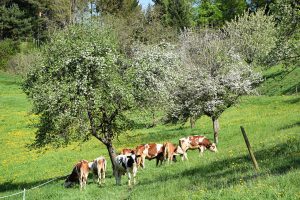
Following a two-year development phase, a support program for agroforestry systems is about to be implemented in the national support strategy of Luxembourg. The program was developed and negotiated by the Consulting Institute Landespflege Freiburg in cooperation with experts from the Chair of Forest Growth and Dendroecology at the Albert-Ludwigs University, the administration in charge, and stakeholders in Luxembourg.
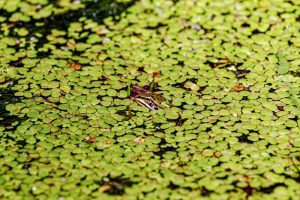
The Haff Réimech is an exceptionally valuable wetland area in Luxembourg. For a long time, the area on the Moselle was used for the intensive extraction of gravel and sand. After intensive sand and gravel extraction ceased, the gravel pits filled with groundwater.
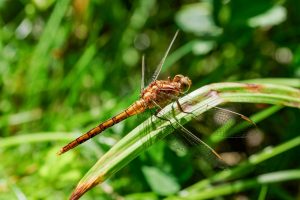
Almost two decades ago, a series of river engineering measures were carried out within the framework of the INTERREG project "Revitalisation of the Taubergießen".
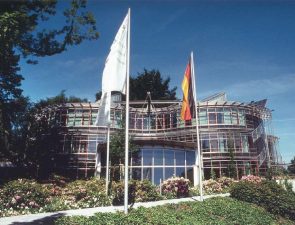
Under the umbrella of the Water-Energy-Food Nexus and Planetary Health, the Germen Environmental Foundation (DBU) is currently funding different projects that focus on human-ecosystem interactions and their consequences for the sustainable provision of ecosystem services, but also on consequences for human health.
Commissioned by the national administration for nature conservation of Luxembourg, Landespflege Freiburg is developing a national programme to support the implementation of agroforestry systems in agricultural landscapes of Luxembourg
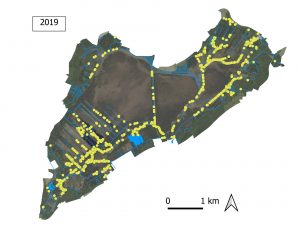
Moors remaining in western European landscapes are habitats of high nature conservation value. Moors are abundant in the alpine foothills of southern Germany. However, most of the moor habitats have been degraded through drainage in the course of former peat exploi- tation and human land use activities.
Visit us at our new office: Stegener Strasse 19 D-79199 Kirchzarten phone: +49 7661 9890 266 or +49 7661 9890 267
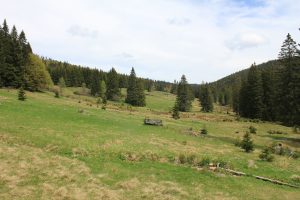
Can profitable land use going along with securing biodiversity for future generations? This central question is relevant also for the recently established Black Forest Biosphere Reserve.
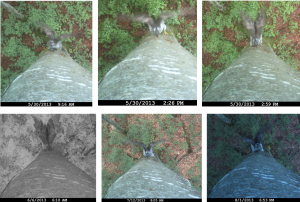
Are Black Woodpecker (Dryocopus martius) tree cavities an answer to depredation risk? A new study underlines the importance of old beech forest habitats concerning biodiversity
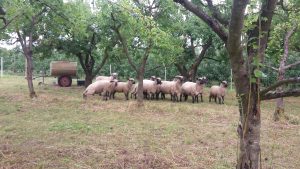
Agroforestry systems can reduce erosion and nutrient loss and can improve soil quality. So why are those systems not cultivated on a larger scale?

Supported by the German Federal Environmental Foundation (DBU) the Landespflege Freiburg strives for the cooperation with an expert panel in order to improve measures to reduce nutrient discharge to rivers and lakes within agricultural landscapes.
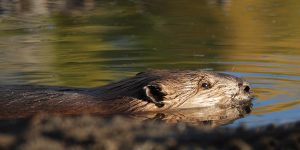
A cool reception. Eurasian beavers returning to Western European Landscapes frequently trigger human-wildlife conflicts. Landespflege Freiburg researcher in dialog with BWagrar.