
Skid trails revisited
Logging roads and skid trails can take up a considerable part of a forest stand. Meanwhile, comprehensive research addresses reducing the impact of heavy forest machinery on forest soils.

Logging roads and skid trails can take up a considerable part of a forest stand. Meanwhile, comprehensive research addresses reducing the impact of heavy forest machinery on forest soils.

Over the past ten years, three research projects („Forschungs- und Entwicklungs-Projekt“) have aimed to record the implementation status of the MAB zoning concept in German biosphere reserves and to develop recommendations for designation, management and further development.

Landespflege Freiburg (Landscape Research Freiburg) and the Program for Restoration of Lakes in the Alpine Forehills of the Federal State of Baden-Württemberg (Southwestern Germany) cooperate in the strategic development of an ecological transformation of the agricultural sector.

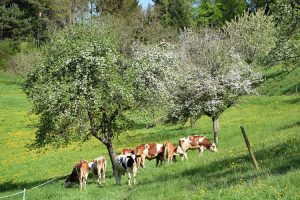
Pastures of high biodiversity value are a characteristic feature of the Black Forest Biosphere Reserve. The ecological conditions of the pastures evolved under traditional grazing regimes (so-called Allmende), where livestock of a municipality was commonly grazed.
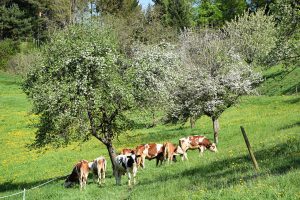
Following a two-year development phase, a support program for agroforestry systems is about to be implemented in the national support strategy of Luxembourg. The program was developed and negotiated by the Consulting Institute Landespflege Freiburg in cooperation with experts from the Chair of Forest Growth and Dendroecology at the Albert-Ludwigs University, the administration in charge, and stakeholders in Luxembourg.
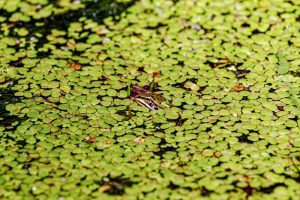
The Haff Réimech is an exceptionally valuable wetland area in Luxembourg. For a long time, the area on the Moselle was used for the intensive extraction of gravel and sand. After intensive sand and gravel extraction ceased, the gravel pits filled with groundwater.
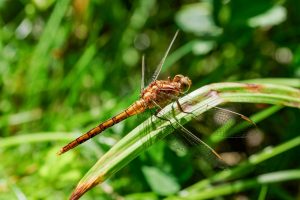
Almost two decades ago, a series of river engineering measures were carried out within the framework of the INTERREG project "Revitalisation of the Taubergießen".
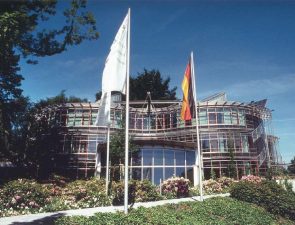
Under the umbrella of the Water-Energy-Food Nexus and Planetary Health, the Germen Environmental Foundation (DBU) is currently funding different projects that focus on human-ecosystem interactions and their consequences for the sustainable provision of ecosystem services, but also on consequences for human health.
Commissioned by the national administration for nature conservation of Luxembourg, Landespflege Freiburg is developing a national programme to support the implementation of agroforestry systems in agricultural landscapes of Luxembourg
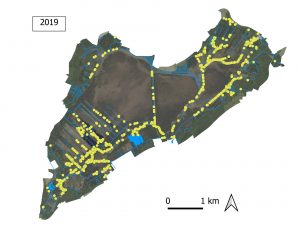
Moors remaining in western European landscapes are habitats of high nature conservation value. Moors are abundant in the alpine foothills of southern Germany. However, most of the moor habitats have been degraded through drainage in the course of former peat exploi- tation and human land use activities.
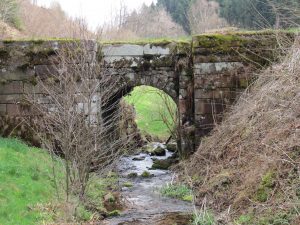
From September 30 to October 2 in Schiltach The conference offers interesting and exciting insights into the diverse and often impressive ways in which we deal with our waters.
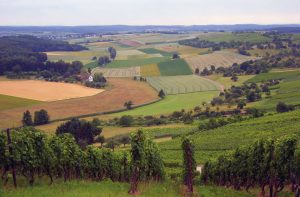
The report on the final evaluation of the special program by the scientific expert committee is now available.
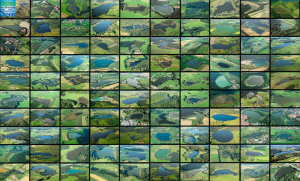
With a joint project, Freiburg Landscape Research supports the action programme for restoration of lakes and ponds in the region of the south-western Prealps, Germany.

Assessing the functionality of buffer zones according to the criteria and goals of the Man and Biosphere - UNESCO-Programme is the aim of a joint project of the Freiburg Landscape Research Institute in cooperation with several partners.
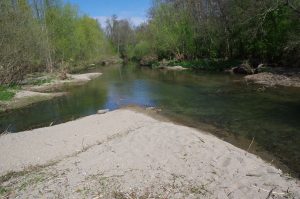
Intensive development and canalization of the River Rhine during previous centuries resulted into severe disconnection of the riparian habitats from the dynamics of the river. An INTERREG-project, started in 2007 in the “Taubergießen” nature reserve, Upper Rhine Valley, aimed on revitalization of the floodplain ecosystem.
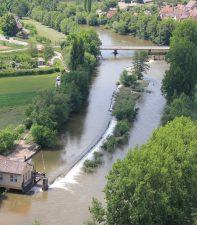
In many places, structures in bodies of water are being removed as part of the implementation of the Water Framework Directive, including those that could have heritage value.
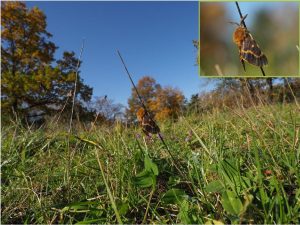
The scientific expert panel now finalized the evaluation of the biodiversity reinforcement program of the federal state of Baden-Württemberg. The report (in German) is available for download:
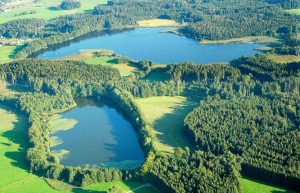
In cooperation with the action program for the restoration of Upper Swabian lakes and ponds, Landespflege Freiburg has launched a project in the field of water protection and biodiversity conservation in agricultural landscapes.

Culterra Volume 68 presents the results of the R+D project “Compensation measures in forests”.
Zoning the area of a reserve into core, buffer, and development compartments is a basic concept of the UNESCO programme on Man and Biosphere (MAB). Specific management objectives are implicit to the zonation types each. Buffer zones are meant to mitigate deliberating impacts on the preserves’ core zones.